
Key Takeaways:
Meditation therapy, rooted in mindfulness, helps individuals manage anxiety by changing their relationship with thoughts and emotions rather than trying to eliminate them. It encourages observation of anxious thoughts without immediate reaction, fostering a calm and clear mindset. Benefits include reduced rumination, improved emotional balance, and increased stress resilience. Consistent practice can lead to meaningful change, enhancing emotional intelligence and overall happiness. This gentle approach promotes curiosity and compassion towards inner experiences, resulting in a quieter mind and greater control over anxiety. If you’re interested in exploring meditation therapy, consider seeking guidance through anxiety therapy with a qualified therapist. It’s a valuable investment in your mental well-being!
How Does Mindfulness Therapy Help With Anxiety?
Meditation, or mindfulness therapy, offers a practical, research-supported way to work with anxiety by changing how we relate to our thoughts, emotions, and physical sensations. Rather than trying to eliminate anxiety, mindfulness helps us develop the skills to respond to it with greater calm and clarity.
Many clients in my anxiety therapy practice in Delray Beach describe anxiety this way: it often feels like living with a mind that never quite shuts up. Thoughts race, the body stays tense, and even when nothing is wrong, it can feel like something bad is about to happen. Especially if we’ve been traumatized or adversely affected in childhood, anxiety can often be a subconscious companion.
We sometimes try to fight anxiety by pushing thoughts away or dropping into “replacement thoughts” like affirmations. Or by simply ignoring the discomfort in hopes it will go away. These are instinctive reactions. It’s how our nervous system has evolved since the days of dinosaurs and warring tribes. But relief can often come from a different, counterintuitive approach.
My Introduction to Meditation and Mindfulness
I came across meditation and some of its counterparts, like yoga, when I travelled after college. Striking out across the country with my college roommate, we stayed with friends and looked for swimming complexes to work out along the way, as we’d been successful, competitive swimmers through our college years. My most important encounter was at the convention for the Association for Humanistic Psychology in San Diego that year.
That week, I saw several demonstrations of high-level yoga by an expertly accomplished Indian man, who twisted and turned his body literally inside out despite his advanced age of 80. He had the body of a lithe, powerful 30-year-old. I noticed that he was preternaturally calm and had a focus that I’ve never forgotten. He shared with us how meditation and yoga had brought him calm and happiness. The gleam in his ancient eyes was deep and memorable and suggested an uncommon peace. “It only takes a lifetime of practice,” he said. For me, that’s all it took. I travelled back East with a mission.
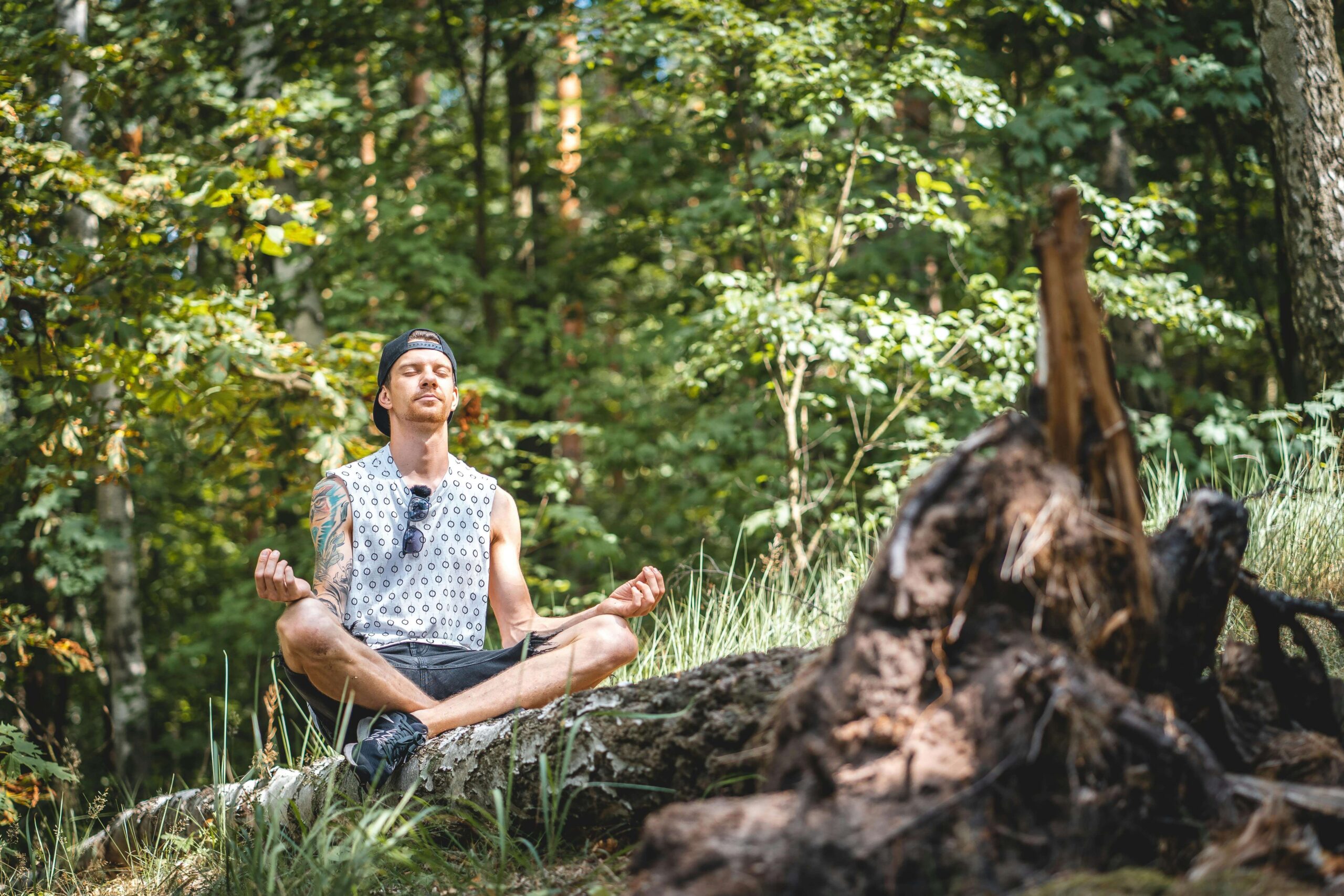
As a competitive swimmer, I’d been doing twice-per-day workouts and feeling the soreness and fatigue that came from it. I wanted to be faster in the water in my Master’s Swimming program. And so, I learned yoga and meditation during graduate school, practiced diligently, and I got faster. Much faster. I learned that calming my mind and integrating that calm into my lean and athletic body gave a “turbo charge” to my swimming. It also made me calmer in my daily life, especially during challenging coursework. I loved it. I’ve practiced daily in my own life ever since. I consider it a kind of “secret superpower”. As a Delray Beach anxiety therapist, when I share it with my clients, I call it Meditation Therapy.
What Is Meditation Therapy?
Meditation therapy refers to the use of mindfulness and awareness practices within a therapeutic setting to help reduce anxiety symptoms. These practices are often drawn from evidence-based approaches such as Mindfulness-Based Stress Reduction (MBSR), Mindfulness-Based Cognitive Therapy (MBCT), and Acceptance and Commitment Therapy (ACT).
In anxiety therapy, meditation is not about “emptying the mind” or achieving a perfectly calm state. Instead, it is about patiently learning to notice what is happening inside us, including thoughts, emotions, and body sensations — without immediately reacting or becoming overwhelmed. Of course, this takes diligent practice over time, as the mind is naturally jumpy and difficult, much like a young stallion who resists training. This is a metaphor used by Sakyong Mipham in his wonderful book Turning the Mind into an Ally. When the mind feels itself under scrutiny and with the possibility of guidance, it rebels. At first. Once we can reassure ourselves that control is not our destination, the mind begins to learn to observe. And relax, think less, and worry less. That is when life can change for the better. Much better.
How Does Mindfulness Help Anxiety?
One of the most powerful effects of meditation is that it changes your relationship with thoughts, especially anxious ones. Instead of getting pulled into worry, we begin to observe thoughts as mental events rather than facts. This creates space between us and our anxiety and offers an opportunity to observe our reactions and moderate them.
Mindfulness practices also help regulate the nervous system. Slow, intentional breathing and present-moment awareness can lower heart rate, reduce muscle tension, and signal to the body that it is safe to relax and rest. This was my most important discovery as a swimmer. A calm and relaxed body can be trained into a formidable competitor.
Broadly speaking, over time, meditation increases emotional intelligence. People often find they become less reactive, more patient with themselves, and better able to tolerate uncertainty — all key skills in managing anxiety. Daniel Golman, in his groundbreaking book Emotional Intelligence, breaks emotional intelligence down into five key areas: self-awareness, self-regulation, motivation, empathy, and social skills. All of these skills improve as a benefit of meditation therapy.

Common Mindfulness Benefits People Notice
Many clients who incorporate mindfulness into therapy report:
- – Less rumination and overthinking
- – Reduced physical tension
- – Improved sleep
- – Greater emotional balance
- – Increased ability to handle stress
- – A stronger sense of calm
While meditation is not a quick fix, consistent practice often leads to meaningful and lasting change and a greater sense of happiness. Dan Harris, famous newscaster and author, in his book Ten Percent Happier, relates that meditation helped him get rid of the nagging, negative, punitive voices in his head and become noticeably happier.
What Does Meditation Practice Look Like?
Meditation therapy typically involves simple, accessible exercises. These include focusing on the breath, noticing sensations in the body, or observing thoughts as they come and go. Practices may last anywhere from a few minutes to twenty minutes, depending on what feels manageable.
Many people are surprised to discover that mindfulness is not about feeling calm all the time. Actually, there is often some discomfort as we learn to stay with our feelings. To sit still when we have an impulse to move and skillfully relax when tension is present. Mindfulness is about learning to stay grounded in the present, even when the mind is busy or uncomfortable.
Who Can Benefit?
Meditation therapy can be especially helpful for people who struggle with chronic worry, high stress, perfectionism, or a tendency to overthink. It is also a valuable tool for those who want to build emotional resilience and prevent anxiety from escalating.
A Gentle Shift, not a Forceful Change
One of the most important things to understand about mindfulness is that it works through gentle awareness rather than force. Instead of trying to control every thought or feeling, you learn to relate to your inner experience with curiosity and compassion. This shift often leads to a quieter mind, a calmer body, and a greater sense of control. Not because anxiety disappears, but because it no longer runs the show.
An Invitation From an Anxiety Therapist in Delray Beach, FL

If you are curious about whether meditation therapy might be helpful for you, seeking a therapist who can provide guidance, structure, and support as you develop is ideal. I’d be delighted to work with you to develop these skills.
If you or someone you love is struggling with excessive overthinking and anxiety, get help. We can vastly improve our capacity to cope with difficulty and live more happily without anxiety and panic. Meditation therapy can be liberating. You only need to ask for help. It’s a wise investment and may take time, but the payoff can be priceless.
I would love to help. Call or text me at 561-213-8030 or email me at jdlmhc@gmail.com for a consultation.
Using Mindfulness and Anxiety Therapy in Delray Beach to Quiet an Overactive Mind
If your thoughts feel constantly busy, meditation-informed anxiety therapy can help you slow down the mental noise and regain a sense of calm. Many people seek anxiety therapy because they’re exhausted from racing thoughts, worry loops, and the feeling that their mind never truly rests.
When anxiety goes untreated, the mind can stay locked in a cycle of anticipation and overthinking. Meditation therapy and mindfulness-based techniques offer a supportive way to retrain your attention, calm your nervous system, and respond to stress with greater awareness rather than automatic reaction. At my counseling practice in Delray Beach, FL, I help clients integrate mindfulness practices with evidence-based anxiety therapy so they can develop practical skills for grounding themselves, improving emotional balance, and restoring mental clarity.
Here’s how you can begin calming an overactive mind:
- 1. Explore how anxiety and constant mental activity are affecting your daily life in a supportive, judgment-free space. Schedule a consultation to get started.
- 2. Learn mindfulness and meditation-based techniques that help regulate anxious thoughts and settle the nervous system with guidance from an experienced anxiety therapist in Delray Beach, FL.
- 3. Build sustainable habits that support calm, focus, and emotional resilience, even when life becomes stressful.
Other Services With John Davis Counseling in Delray Beach, Florida
Anxiety therapy can help you step out of the constant cycle of worry and mental overload by learning practical ways to calm both the mind and nervous system. With consistent support and effective tools, such as mindfulness and meditation practices, many clients begin to experience greater emotional balance, improved focus, and a renewed sense of control in their daily lives.
At the same time, anxiety often connects with other life challenges. Chronic stress, burnout, unresolved trauma, and major life transitions can all contribute to an overactive mind, which is why treatment often needs to address more than anxiety symptoms alone. In addition to anxiety therapy, my Delray Beach practice offers trauma-informed therapy, couples and relationship counseling, grief and loss support, addiction treatment, and guidance for individuals dealing with ADHD/ADD, impulse-control difficulties, spiritual concerns, or narcissistic personality disorder.
Each treatment plan is tailored to the individual. I use an integrative and evidence-based approach that may incorporate mindfulness-based techniques, psychodrama, clinical hypnosis, CBT, EMDR, or Gestalt therapy, depending on what best supports your healing and growth. By combining therapeutic insight with practical strategies, the goal is to help you quiet the overactive mind while building lasting emotional resilience.
My mission is to support clients in strengthening their coping abilities, developing healthier emotional patterns, and rediscovering a sense of peace and stability in everyday life. I encourage you to explore the blog for additional mental health insights and to reach out to my Delray Beach office when you’re ready to begin your therapy journey.
About the Author
John Davis, LMHC, is an experienced anxiety therapist in Delray Beach, FL. He helps individuals, couples, and families better understand and manage the challenges that anxiety can bring into everyday life. With a background in child and family therapy, he recognizes how anxiety patterns often develop early. And how they continue to influence communication, self-confidence, decision-making, and emotional well-being over time.
John takes a trauma-informed, integrative approach to treatment. He incorporates evidence-based methods such as EMDR, CBT, Gestalt therapy, mindfulness practices, psychodrama, and clinical hypnosis. Enabling him to help clients uncover the underlying causes of anxiety and develop practical strategies for lasting calm and clarity. In addition to his clinical work, John serves as Executive Director of the Mental Health Counselors’ Association of Palm Beach. He has received the Outstanding Community Service Award and is featured as an expert therapist on StayMarriedFlorida.com. Through his practice, he remains dedicated to helping clients build more stable, resilient, and emotionally grounded lives. One session and one skill at a time.